

[popup_trigger id=”12364″ tag=”p” classes=”text-center font-blue”]中文版本 / Chinese version[/popup_trigger]
Research conducted by scholars from UTM highlights variations in the standard of service provided to visitors by temple keepers of different local Chinese folk-religion temples
Research by scholars from UTM indicates variations in the standards of service provided by keepers of Macao’s Chinese folk-religion temples. Dr. Jack Ly Tuan Phong and Dr. Sherry Tan Xiuchang’s study suggested that lack of stability and consistency in temple keeper services across the city posed challenges in terms of visitor satisfaction, with the possibility that any negative experiences could influence Macao’s image as a tourism destination.
The scholars recommended collaboration between temple managements and the city’s government in order to establish more predictable and standardised services for visitors. However, Dr. Ly and Dr. Tan cautioned that achieving this goal would require substantial coordination among different parties, on matters ranging from temple management to human and financial resources, and the preservation and inheritance of temple culture.
Dr. Ly and Dr. Tan’s research delved into the diverse work and roles associated with temple keepers in Macao’s Chinese folk-religion temples. The study identified four potential roles for such group of people: temple attendant, temple representative, cultural knowledge broker, and destination ambassador. The extent to which the work of individual keepers corresponded to that list of roles depended on the particular nature of their job. That could vary according to factors such as their employment status (full-time, part-time, or volunteering); whether there was permission from temple management for them to interact with visitors; and the inclination of temple keepers to offer services and engage with visitors.
The academic paper resulting from Dr. Ly and Dr. Tan’s work, titled “Temple Keepers in Religious Tourism Development: A Case in Macao”, was published last year in the Journal of Heritage Tourism.
The importance of temple keepers
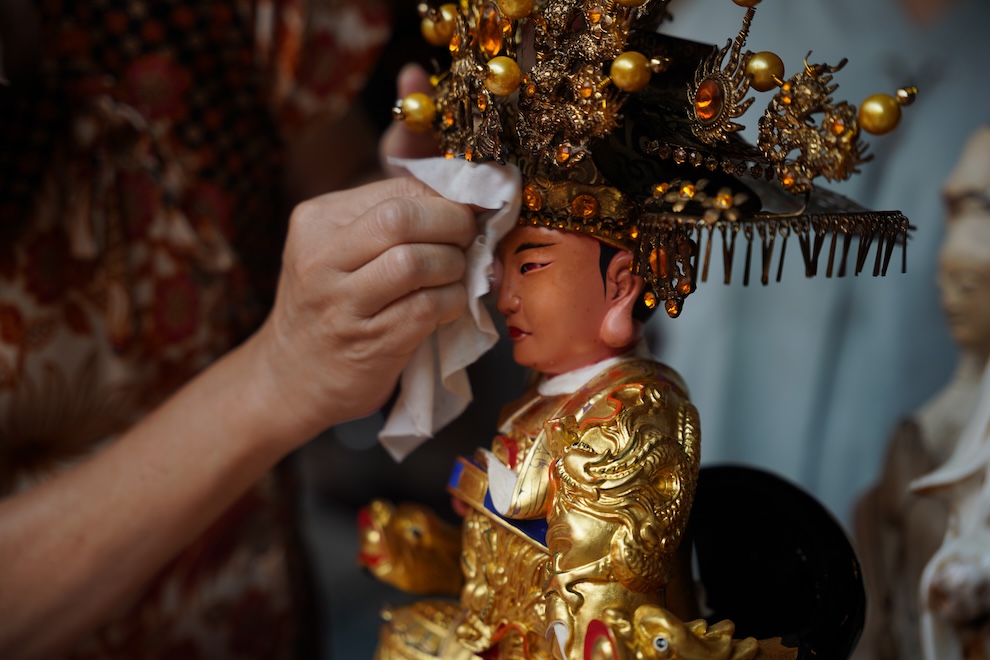
Throughout Asia, many Chinese folk-religion temples are overseen by temple keepers rather than clergy, the UTM researchers noted. These individuals play pivotal roles in daily operations, religious services, and cultural events. As direct communicators with visitors, temple keepers significantly influence pilgrim and visitor experiences, making those staff members integral to development of religion-linked tourism.
Dr. Ly and Dr. Tan emphasised that Macao temples attract not only pilgrims but also tourists seeking to experience, learn about, and even practise local culture and religion. Understanding the profile of the temple keeper community in Macao served as an “important reference” for temple management and for the local government, in terms of preserving temple culture, enriching visitor experiences, and developing the city’s image as a tourism destination.
As part of their research, the UTM scholars conducted site visits to understand the working environment and daily routines of temple keepers. They observed as non-participants, in order to see the interactions between temple keepers and visitors. Additionally, face-to-face, in-depth interviews were carried out with temple keepers and management representatives – such as temple directors, and/or chairpersons. The replies provided insights into the behaviour, perspectives, and interpretations of temple keepers regarding the research issues covered by the study. A total of 27 respondents from 20 temples was interviewed.
The researchers noted that Macao, despite its limited size, boasted more than 50 temples built between the 16th century and the late 20th century. Each temple, they added, belonged to a different association, private interest group, or was publicly owned. The way each temple was run depended on the management style of its owners.
While some temples had an active full-time temple keeper staying on site, others had a part-time or volunteer helper. The researchers found that even with full-timers, some management organisations assigned only simple tasks without briefing the keepers with comprehensive information about the temple’s background or encouraging them to have effective interaction with visitors.
Most temple keepers in Macao, the authors noted, are residents from the surrounding community rather than clergy or official members of a religious group. This unique identity was believed to offer visitors a “more authentic experience and a sense of closeness”. The collected data indicated that visitors were willing to engage with temple keepers to exchange information and knowledge, respecting them as “community elders”, in line with Confucian practices.
MORE INFO
[mks_tabs nav=”horizontal”]
[mks_tab_item title=”The researchers”]
Dr. Jack Ly Tuan Phong, also known as Tuan Phong Ly, serves as a Visiting Assistant Professor at the Faculty of Tourism Management at UTM. Additionally, he holds the role of Coordinator for UTM’s Cultural and Heritage Management Programme. Dr. Ly earned his PhD from the Hong Kong Polytechnic University. His research interests encompass ecotourism, national park model management, cultural heritage management, tourism development in Southeast Asia, museum development, and tourist behaviour.
Dr. Sherry Tan Xiuchang is an Assistant Professor at UTM’s Faculty of Hospitality Management. She earned her doctorate in hotel and tourism management from The Hong Kong Polytechnic University. Dr. Tan’s research interests span event management, destination branding, tourist behaviour, heritage, and culture. In addition to her academic pursuits, she has actively engaged in consultancy projects, focusing on service quality, tourism market and tourist behaviour, event management, and human resource development. These projects have been commissioned by various bodies under the Macao Government.[/mks_tab_item]
[mks_tab_item title=”The paper”]
Tuan Phong Ly and Xiuchang Tan: “Temple keepers in religious tourism development: a case in Macao”, Journal of Heritage Tourism, Volume 18, Issue 1, Pages 67 to 83, 2023
https://doi.org/10.1080/1743873X.2022.2134019[/mks_tab_item]
[/mks_tabs]
Editor: Research Corner | A partnership between Macau Business and UTM