


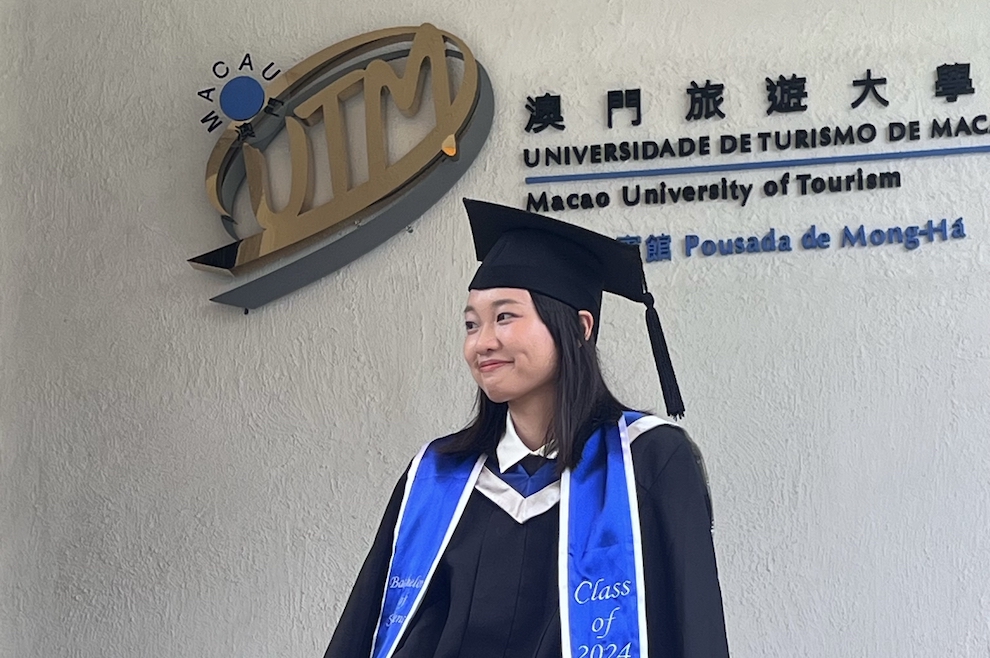

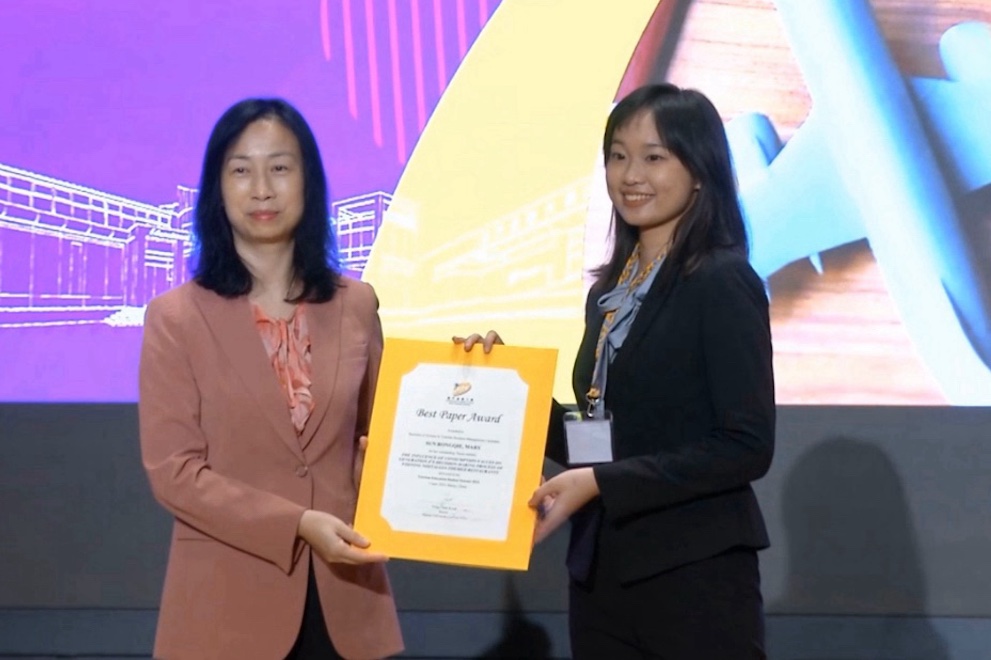

Mary Sun Rongqie, freshly graduated from UTM, has won a master’s degree study place overseas, after receiving offers from universities in Canada, the United Kingdom, and Australia. She advises undergraduates aspiring to go abroad for postgraduate studies to start preparing promptly. Mary emphasises the importance of planning and of well-crafted applications
Mary Sun Rongqie, who graduated from UTM this summer having studied Tourism Business Management, was recently accepted into the prestigious University of Toronto, in Ontario, Canada. She also had postgraduate-study offers from other top-tier universities, including The University of Edinburgh and The University of Manchester, in the United Kingdom; and The University of Melbourne, in Victoria, and The University of Sydney, in New South Wales, both Australian institutions. Ultimately, she chose to pursue a Master’s in Developmental Psychology and Education at the University of Toronto, inspired by a calling she discovered during her undergraduate years at UTM.
Mary says her decision to opt for postgraduate study in education was influenced by a pivotal experience in her second year at UTM. Through the UTM Volunteer Circle, she offered her talents to support the English-language teaching work of the Second National High School, in Congjiang County, an impoverished area in Guizhou Province.
“That experience made me realise that education is my true calling,” Mary reflects. “I hope that by studying developmental psychology, I can help children develop their learning capabilities, and guide them to identify their passion.”
Tips for applying to postgraduate programmes
Drawing from her own experience, Mary advises current UTM undergraduates aspiring to study abroad for a master’s degree to make an early start in preparing applications, plan strategically, and have clear goals.
The application process for international postgraduate programmes is rigorous and demands long-term preparation. For Mary, this began as soon as she started her undergraduate studies, setting a personal goal of achieving a 3.8 grade point average (GPA).
She also stresses the importance of early preparation for English-language proficiency tests, which might be mandated for top postgraduate programmes. Achieving a high score either in the Test of English as a Foreign Language (TOEFL) or the International English Language Testing System (IELTS) exam is commonly required.
“You can start preparing for these tests from the summer of your second year, and continue improving your scores to meet the language requirements of your target universities,” she advises. Mary also highlights the possibility that some universities may waive language requirements. She says would-be applicants should inquire about this possibility with admissions teams.
Relevant work or internship experience may be other elements crucial to a successful application. Mary recounts her two education-related internship experiences during a one-year exchange programme at Beijing International Studies University and East China Normal University in Shanghai; the exchange programme was part of her undergraduate studies at UTM. These internships served to “strengthen the credibility and competitiveness” of her application for postgraduate studies, she points out.
The statement of purpose and the applicant’s résumé are equally important elements of the process. “The key is to be sincere and incorporate storytelling, with specific examples rather than being too vague,” Mary suggests, referring to the statement of purpose. She also encourages candidates to include extracurricular activities in their résumé – such as volunteer work, participation in entrepreneurship competitions, and involvement in undergraduate student activities – to demonstrate their comprehensive abilities.
Recommendation letters are a critical component of the application package. Mary suggests that prospective master’s degree programme candidates should begin identifying potential referees – such as internship supervisors and professors – from the first semester of their third year of undergraduate studies.
When it comes to selecting graduate schools, Mary highlights the importance of conducting thorough research. By compiling a list of schools that offer relevant programmes, understanding admission rates, and analysing the profiles of admitted students, prospective applicants can make informed decisions. She also suggests applying to a range of schools, to increase the chances of getting offers.
Mary says the most crucial piece of advice is to take the initiative and check the official websites of prospective schools. “Understand the programme requirements and be aware of the application opening and closing dates,” she stresses. “Some schools even have early admission rounds and rolling admissions, so the earlier you apply, the more likely you are to receive an offer.”
Editor: UTM Public Relations Team



攻讀酒店管理學士學位-74x55.jpeg)
