






UTM alumna Ms. Selena Lei highlights the importance to her academic career of her undergraduate degree in Heritage Management from the University. She is now pursuing a PhD in urban studies at Université de Paris-Est in France, following a master’s degree in Belgium. She emphasises her UTM programme’s interdisciplinary strength, and advises current students to make use of the opportunities the University offers for practical industry experience and academic study
A bachelor’s degree from UTM can unlock numerous potential paths career-wise, not limited to the field of tourism and hospitality. Such a degree also serves as a gateway to postgraduate studies at prestigious institutions worldwide, says UTM alumna Ms. Selena Lei Peng Ieng. She is currently pursuing a PhD in urban studies at the Université de Paris-Est in France.
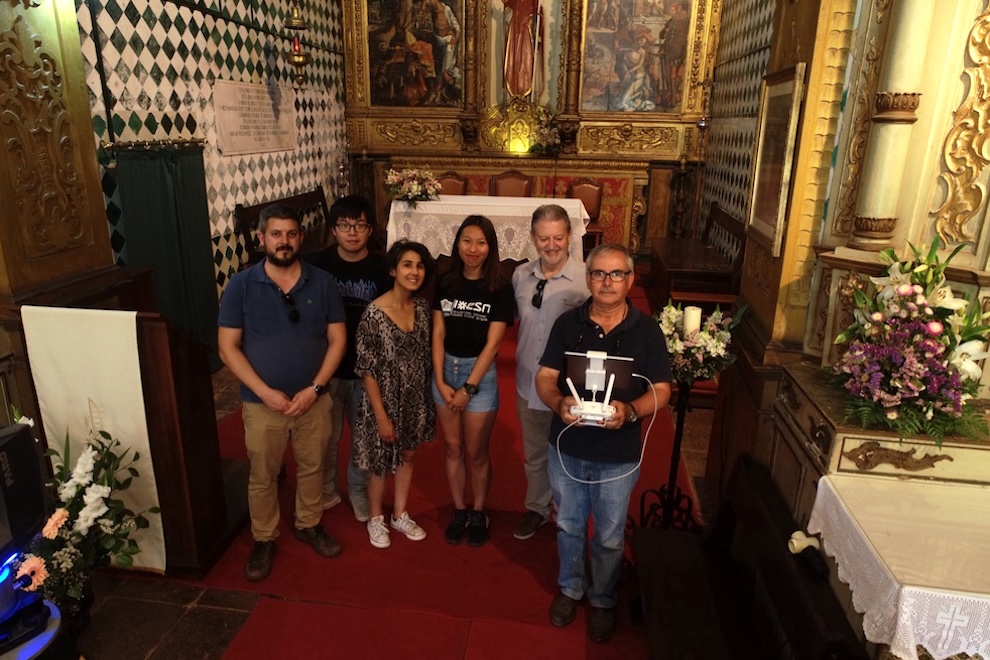
Ms. Lei graduated from UTM with a bachelor’s degree in Heritage Management. During her time at the University – then known as Macao Institute for Tourism Studies – she took advantage of various opportunities to expand her horizons, including a six-month curricular internship at the HERCULES Laboratory, part of the University of Évora in Portugal. HERCULES is a high-tech facility specialising in research on tangible cultural heritage.
A Macao native, Ms Lei says her passion for cultural heritage “truly blossomed” during secondary school, when she became involved in a local non-profit organisation focused on heritage conservation. Throughout her undergraduate studies in the Heritage Management programme – now known as Cultural and Heritage Management – she discovered that cultural heritage is a “vast and interdisciplinary field”.
This breadth initially led to uncertainty about her future path. “I found myself torn between pursuing cultural tourism or focusing on the conservation of heritage architecture,” Ms. Lei recalls. However, her internship at the HERCULES Laboratory helped her to focus. “I became firmly committed to specialising in heritage architecture conservation,” she says.
The time in Portugal also revealed to her the diversity of perspectives on cultural heritage protection in Europe, which motivated her to further her studies in this area.
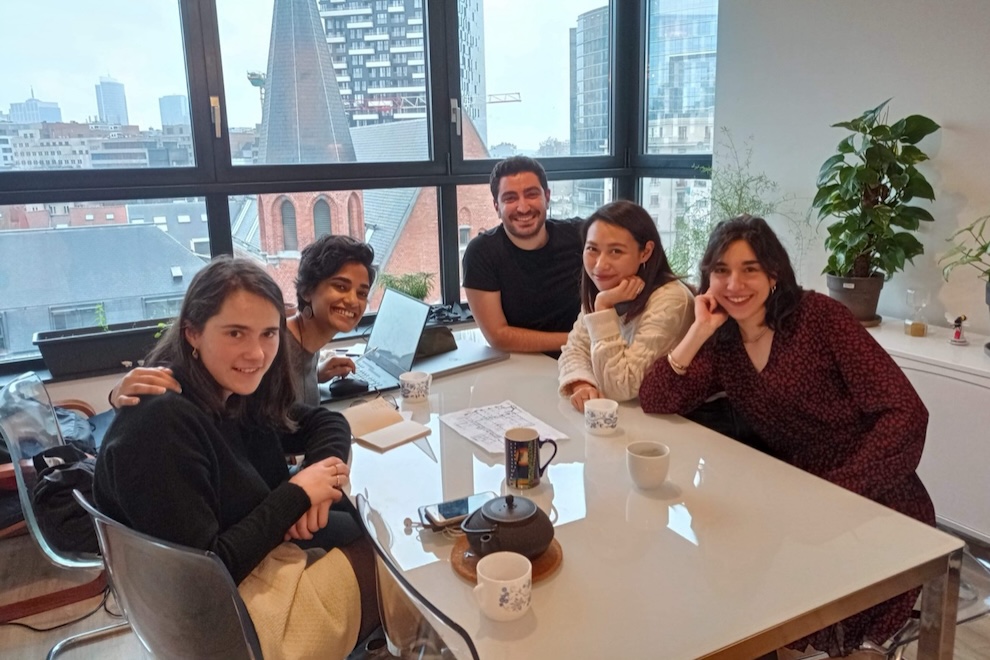
After graduating from UTM, Ms. Lei pursued a master’s degree at KU Leuven in Belgium, specialising in the conservation of monuments and sites. “During my master’s thesis research, I met the professor who now supervises my doctoral work.”
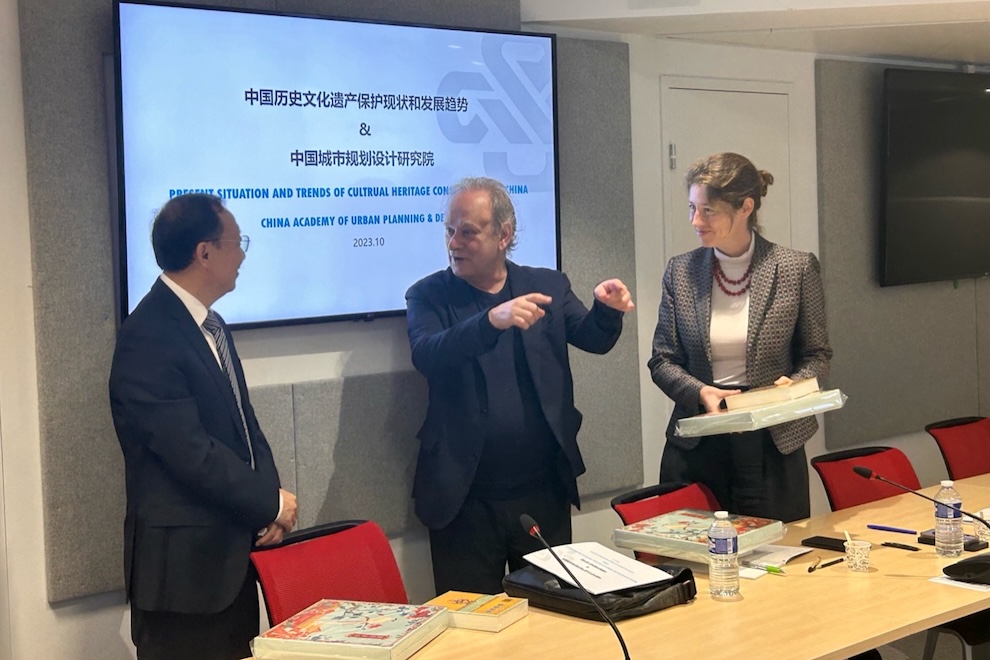
When her professor suggested she pursue a PhD in urban planning in France, Ms Lei embraced the challenge. “I spent a year learning French to prepare for this next step and successfully applied for a doctoral programme. I have now been accepted into France’s largest urban studies centre, the Université de Paris Est,” she explains. “Within this centre, I’ve been admitted to the Doctoral School for Cities, Territories, and Transport, and I’m conducting my research at the Lab’urba laboratory.”
Ms. Lei’s current research explores the relationship between cultural heritage and urban populations, as well as the role of heritage within urban planning. “My doctoral research specifically addresses the potential for industrial buildings to be recognised as heritage in the context of 21st-century urban development,” she says.
Reflecting on her time at UTM, Ms. Lei emphasises its impact on her career path. “My experience at UTM has been an unforgettable journey and laid a solid foundation for my current role as an academic researcher,” she says, noting the importance of the thesis required in Year 4 in order for UTM bachelor’s students to graduate.
She also highlights the strengths of graduates from UTM’s Cultural and Heritage Management programme. “A key one is our understanding of cultural heritage and its broader applications,” she explains, pointing to connections between heritage, tourism, economics, urban planning, the environment, and sociology. “Compared to students with backgrounds in architecture or engineering, graduates of our programme are better equipped to conduct and comprehend integrated cultural heritage research.”
For current UTM undergraduates, Ms Lei’s advice is clear: never doubt your abilities. “It’s normal to feel uncertain at different stages of your life,” she says. “When I graduated with my bachelor’s degree, I questioned whether, as someone who wasn’t trained in architecture or urban planning, I was suited to studying heritage conservation. Graduates from other disciplines may have their strengths, but so do we: we possess a comprehensive understanding of cultural heritage. What we’ve learned and what we’re capable of might be more than we realise.”
She also advises UTM undergraduates to cherish their time as a student at the University. “Make the most of every practical opportunity, whether it’s an internship or writing your thesis,” she says. “Appreciate every learning experience, because you might find that what you learn now will be invaluable when you develop your research interests in the future.”
Editor: UTM Public Relations Team




攻讀酒店管理學士學位-74x55.jpeg)
