

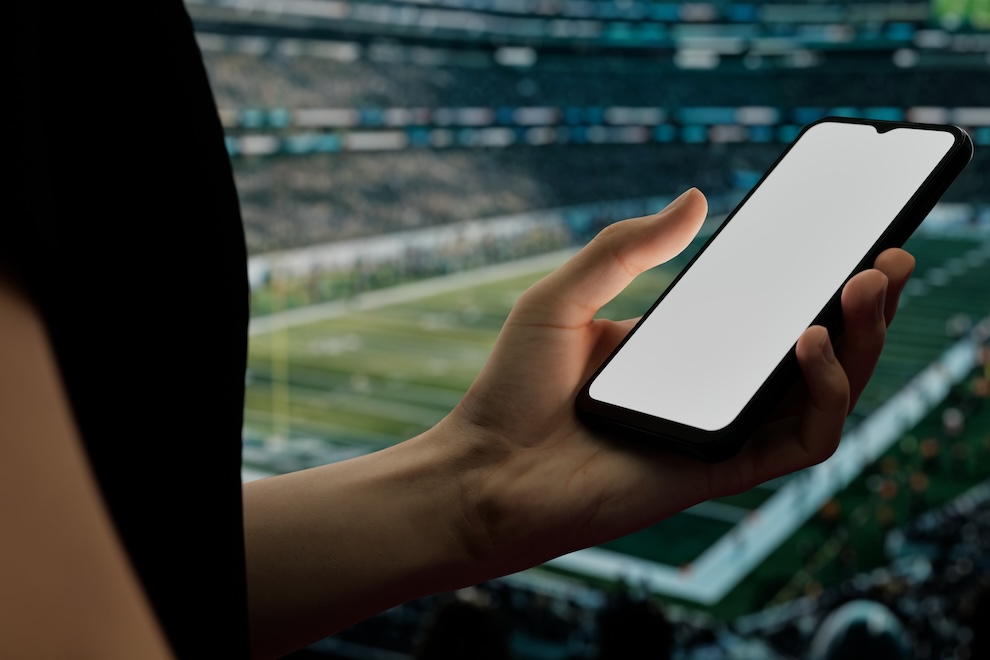

Study by UTM scholars reveals that augmented reality can enhance attendee experience at mega sports events, by boosting spectators’ physical, cognitive, and affective engagement. This can increase the likelihood of people wanting to attend future editions of the event. Effective visual design ensuring ease of use is crucial for augmented reality to be a success with consumers, the research found
Augmented reality applied to mega sports events can have positive effects on attendee experience, namely regarding physical, cognitive, and affective engagement, says a new study produced by two UTM scholars. According to their findings, augmented reality use in mega sports events can also translate into higher intention to revisit among event-goers.
Dr. Clara Lei Weng Si, Dean of UTM’s Faculty of Innovative Hospitality Management, and Dr. Henrique Fátima Boyol Ngan, Director of the University’s Centre for Education Quality Management, conducted the research. It was published earlier this year in the scholarly journal Event Management. (Click here for access to full paper.)
“Given the increased adoption of immersive technologies in tourism events, there is a need to understand how to best implement such technologies and their effects on visitors,” the UTM scholars noted in their paper.
Dr. Lei and Dr. Ngan pointed out that mega sports events have become increasingly popular in recent years, attracting a diverse crowd. “Some destinations have even used mega sport events as an attraction to entice visitors from around the world,” they added.
As the appeal of mega sports events has widened, so has the disparity regarding levels of knowledge and familiarity about particular sports among the spectators. Thus, it is becoming a trend for event organisers to provide attendees with a wealth of information during the event, through augmented reality technologies that integrate information seamlessly, causing minimal disruption for attendees while the event is live.
This means that, for instance, attendees can obtain real-time coverage information and statistics about the athletes and sports they are watching without needing to “disconnect” from the event.
For the research, a questionnaire was presented to people who had attended the 2022 Beijing Winter Olympics. Recruitment of participants was done through the Tencent questionnaire platform, one of the most popular and widely used professional online survey systems in China.
The authors chose the platform because it had the capability to identify Beijing Winter Olympics attendees. The online distribution of the questionnaires occurred after the Beijing Winter Olympics. It was also verified that questionnaire respondents had experienced via their smartphones the augmented reality elements available at the event. A total of 204 valid questionnaires was collected.
“The Beijing Winter Olympics was chosen as it is reported to have employed the most cutting-edge technologies to enhance consumer experience at that time, with the latest applications of 5G technologies,” the researchers explained. “The 5G coverage signal was ensured across all Olympic venues and [surrounding] roads, facilitating the use of augmented reality.”
Creating more enjoyable experiences
The research findings showed that immersive mediums such as augmented reality “can deliver a more enjoyable event experience in the three dimensions of event experience: affective, physical, and cognitive engagement,” wrote Dr. Lei and Dr. Ngan.
“Given that using immersive applications can provide additional information while spectating the games, it is natural that individuals have more to think about and reflect on with the sheer amount of information,” they added. “It may also provide learning opportunities as augmented reality presents information that would not otherwise be available while spectating the games.”
At the affective level, as shown by the findings, “it is evident that augmented reality can also trigger an emotional response by stimulating excitement and senses during the event and creating memorable post-event experiences,” the authors noted.
“Finally, augmented reality creates an opportunity to interact with the hyperreality that keeps the user active and engaged with the event.”
The authors cautioned in their paper that “the success of augmented reality implementation depended on the effective visual design of the augmented reality platform”; that, they noted, “would significantly influence users’ perceived ease of use and usefulness of the augmented reality.”
The paper also highlighted implications of augmented reality usage for event creation and planning.
“Adopting augmented reality in event content and programme creation is expensive, so it is essential to understand the augmented reality effects on the event experience brought to attendees,” Dr. Lei and Dr. Ngan wrote.
The aesthetics and visual design were found to be of “prime importance” in affecting attendees’ attitude towards using augmented reality, they said.
“Thus, event managers should meticulously choose a supplier capable of providing outstanding aesthetics and visual design of the augmented reality interface,” it was suggested. “A terrific visual appeal (augmented reality interface design) is paramount to creating a positive event attending experience and future event attendance intention.”
The researchers added that, when the focus is to engage participants cognitively, priority should be given to designing an augmented reality platform that is user-friendly. Augmented reality utility – i.e., perceived usefulness – should be prioritised to emphasise enjoyment, interactivity, and active participation in the event, they pointed out.
Editor: UTM Public Relations Team





攻讀酒店管理學士學位-74x55.jpeg)
