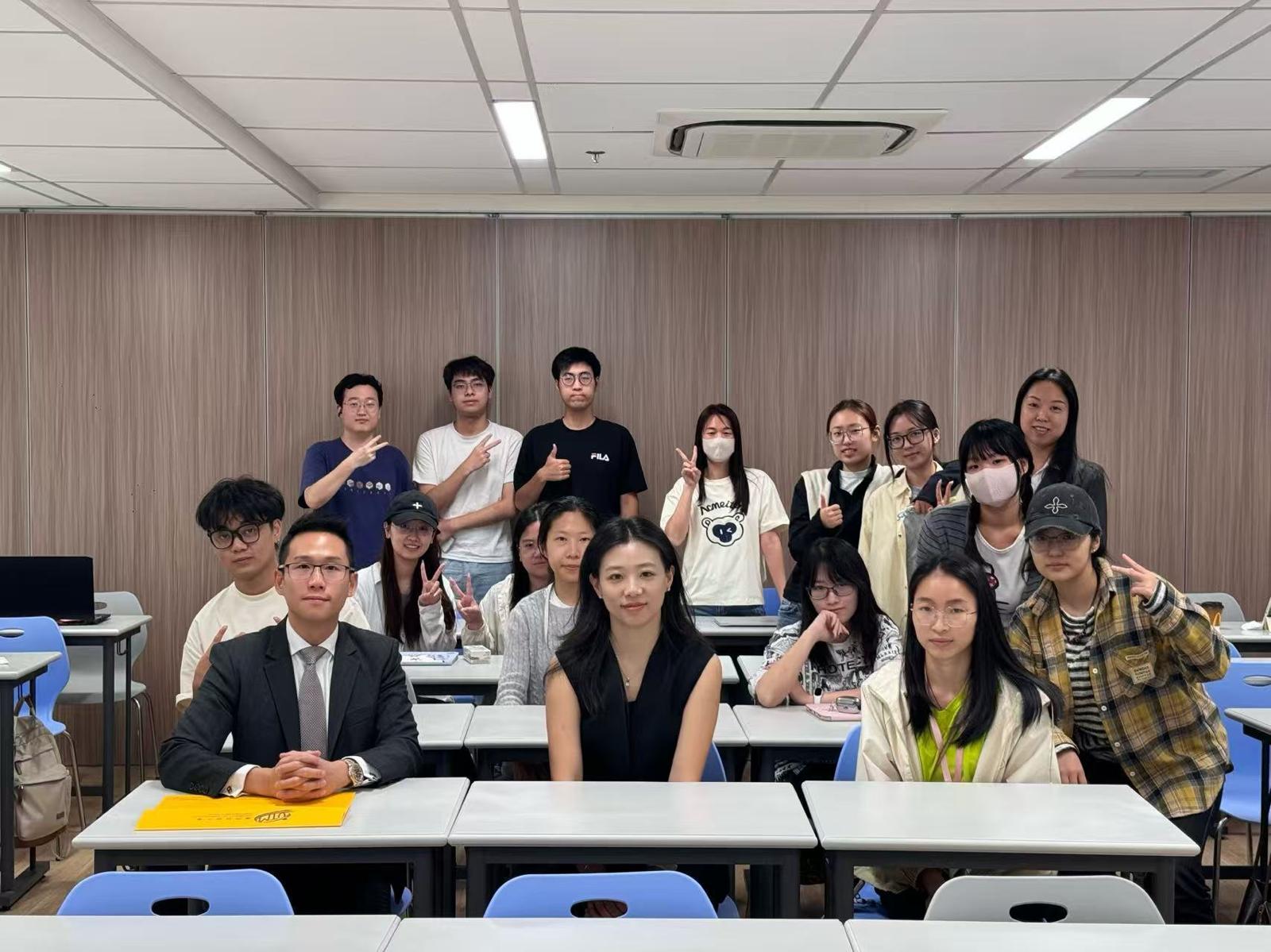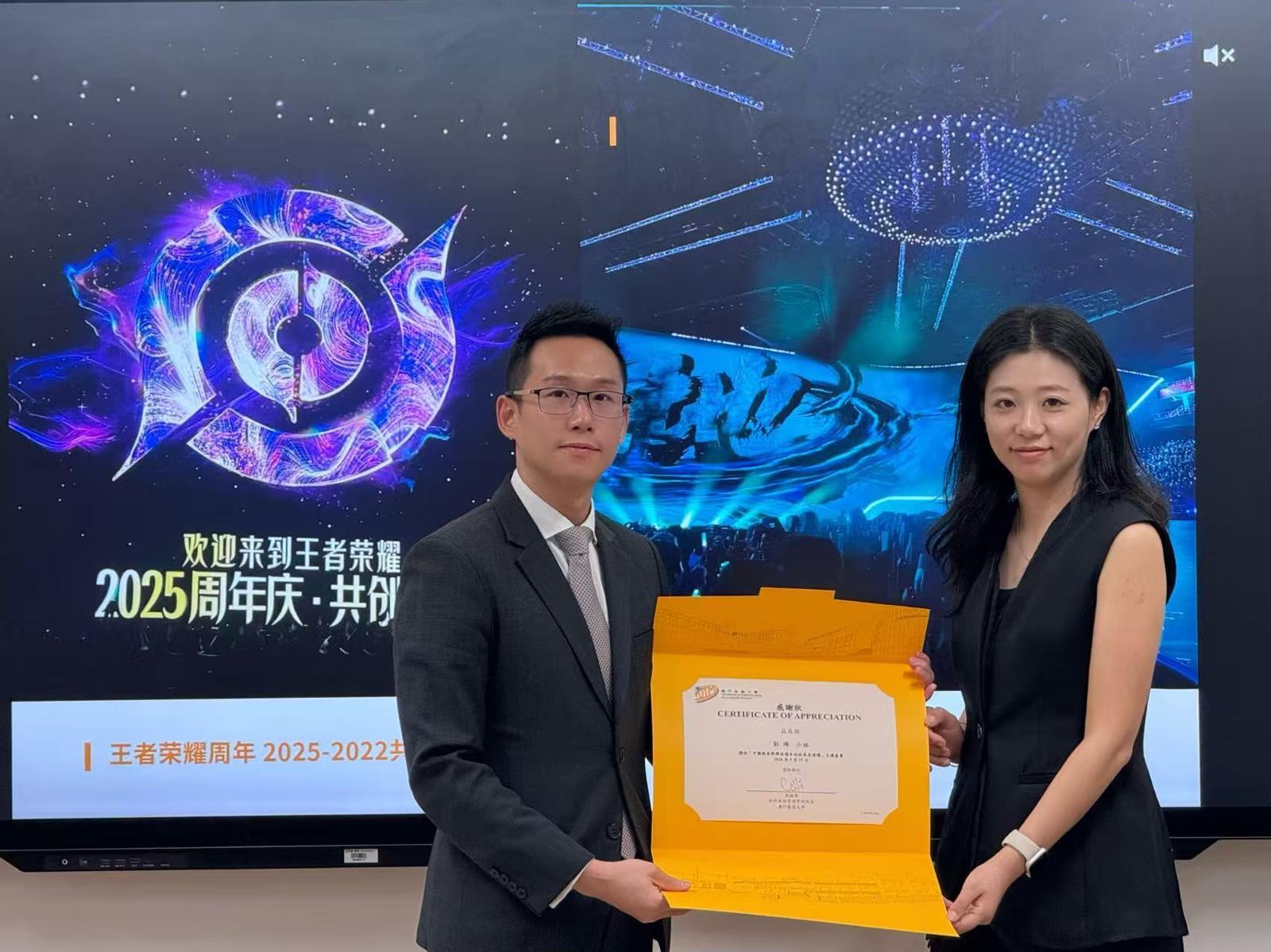
Recently, Instructor Mr. James Wong invited Ms. Peng Ye, General Manager of Huoying Digital, to deliver a guest lecture to students enrolled in the Master's programme in "Trends in Health and Luxury Hospitality." The lecture focused on the integration and transformation of the game visual effects and visual effects industries into cultural tourism, as well as how immersive experiences can be created through digital means from a frontline market perspective.
Ms. Peng began by introducing the company's core business operations, including visual design for large-scale gala events (such as the Honor of Kings Co-creation Night and Hunan TV's New Year's Eve Gala), night tourism projects (such as the Wuhan Yangtze River Lighting Show), animation production, and the development of cultural tourism IPs. She noted that, in response to changing market environment, the company began attempting a transformation into the cultural tourism industry in 2017, participating in tourist attraction development projects.
During the lecture, the guest conducted an in-depth analysis of the core pain points and transformation strategies within the cultural tourism market. She noted that traditional 2D content can easily induce visual fatigue among visitors. To address this challenge, the company has sought to incorporate immersive experiences into its projects, such as utilizing naked-eye 3D technology to deliver more profound experiences through greater visual impact, while disseminating key information more effectively in the market through fast spreading video content and symbolic imagery.
On the other hand, cost control is a key consideration in project implementation. In its collaborative projects with museums, the company has introduced "de-realized" performances, employing gauze screen technology to reduce project costs and ensure the stability of performances. In the immersive experience of cruise ship performances, fixed NPCs introduced by the performance troupe are adopted, which not only reduces personnel costs but also significantly mitigates the impact of staff turnover on projects, while ensuring the continuity of cultural output.
When discussing market fluctuations and content creation, the guest pointed out that the short drama market is characterized by rapid technological iteration and frequent software updates, requiring teams to possess strong adaptability. Production proficiency and writing proficiency serve as core competencies, which depend on long-term project accumulation. In the face of the impact of the AI market, creativity is the key to mature works. Furthermore, she observed that aesthetic trends in content are shifting from "large and ornate" towards the pursuit of refined, small-scale content.
Regarding consumption trends, the guest noted that current consumption is primarily shifting towards experiential consumption and emotional satisfaction, with "local culture" serving as a significant factor in attracting consumers. With respect to government projects, the guest shared the "co-creation and collaboration" model, emphasizing the necessity of considering the secondary utilization of existing resources, while proposing two approaches: first, strengthening the inherent cultural attributes; second, pursuing comprehensive innovation.
During the Q&A session, the guest also shared the full process of a tourist attraction development project, which primarily consists of on-site investigation, the formulation of a planning proposal, the development of an implementation plan, and specific execution. Additionally, she placed particular emphasis on discussing the potential and challenges of the AI short drama market.
Instructor Mr. James Wong added that market trends and changes in customer consumption needs and habits are critical focal points for the service industry. By inviting industry experts to share frontline practical experience, students are better able to apply theory to actual business practice, truly achieving the goal of "learning for application." This lecture enabled students to gain a clearer understanding of the operational logic and future trends of the cultural tourism industry in the digital era, while also inspiring them to reflect on their future career planning.