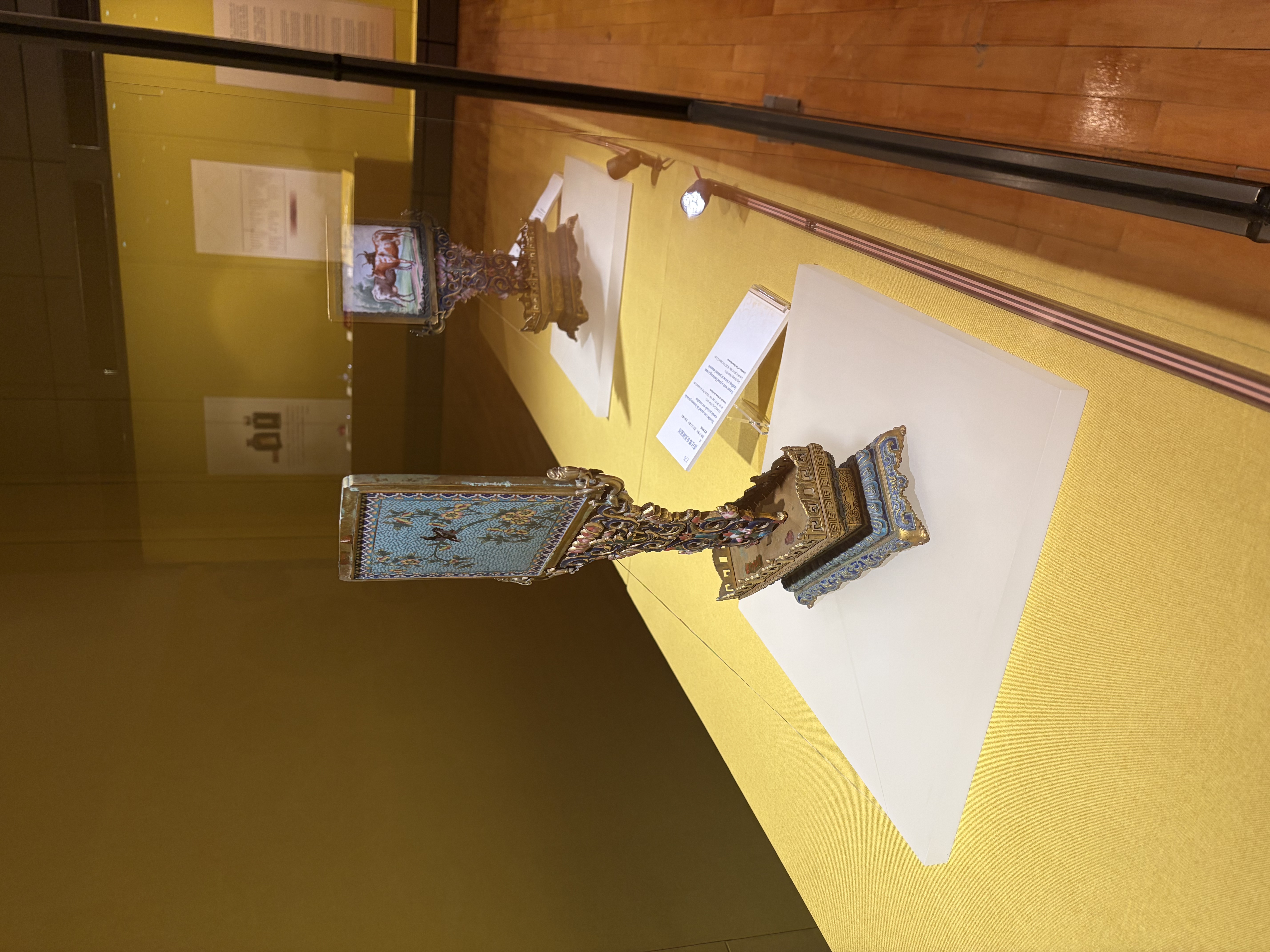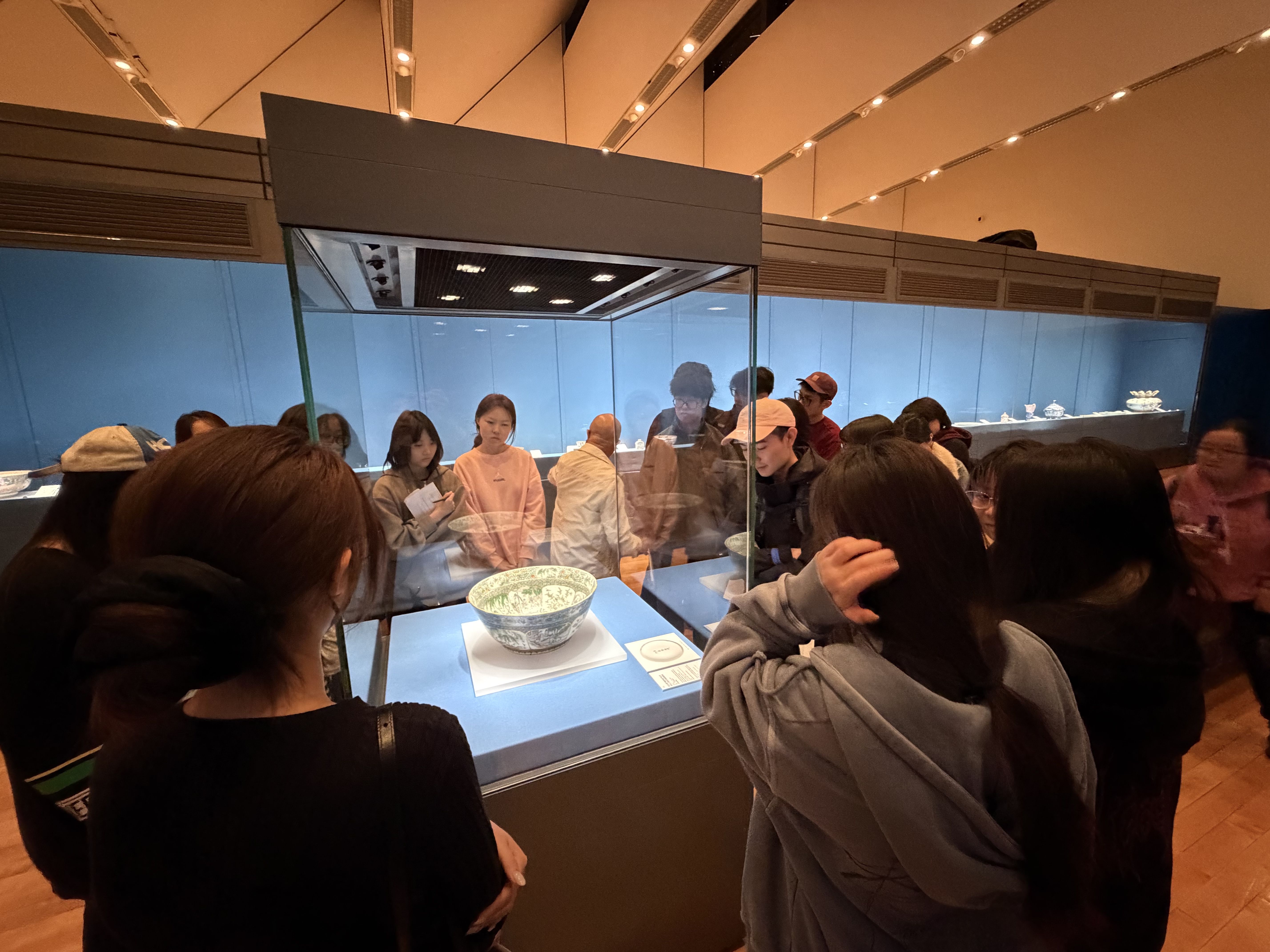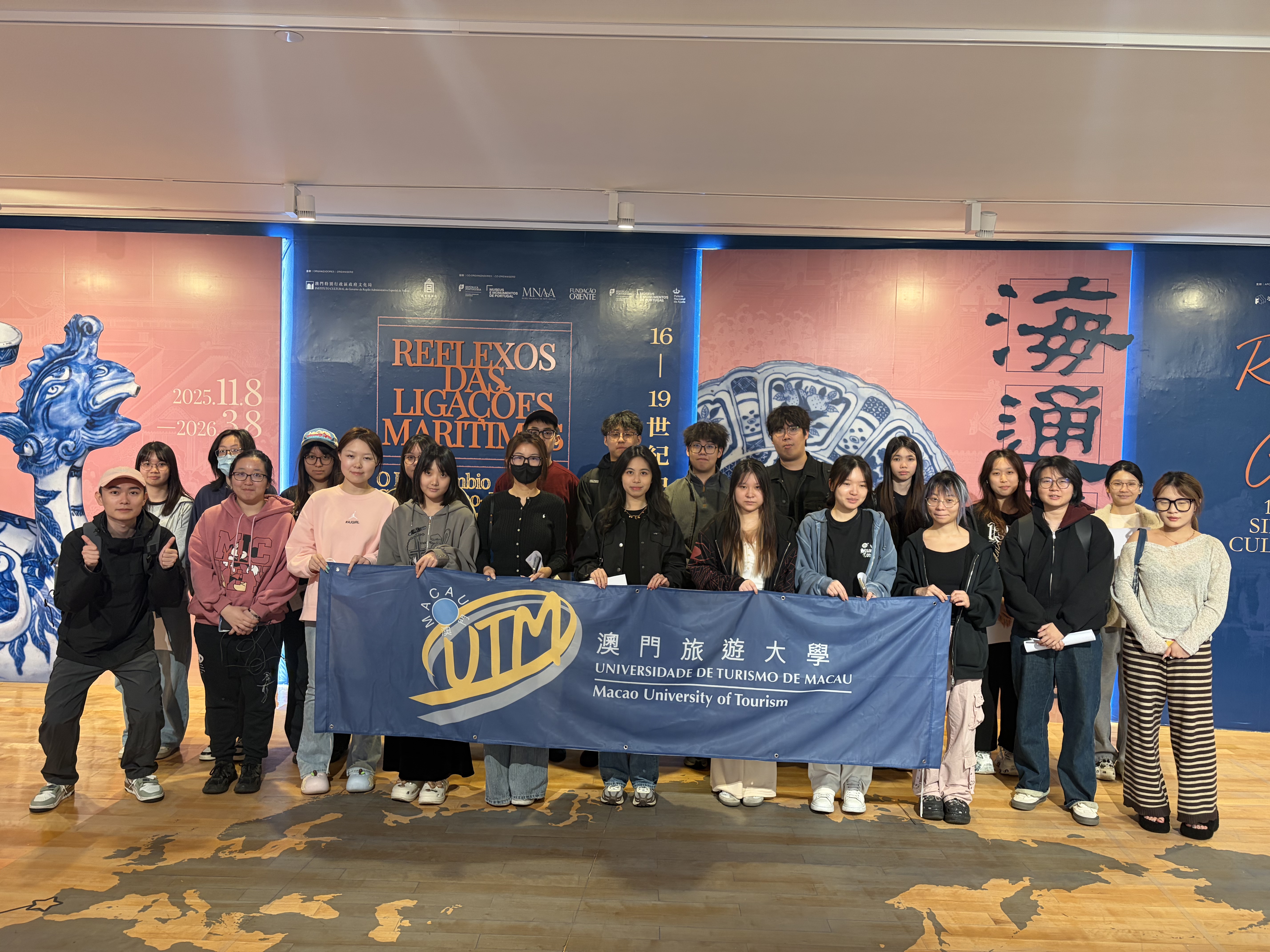
In March 2026, students enrolled in the undergraduate course Museum Management and Curatorship visited the Macao Museum of Art (MAM) to engage with the special exhibition Reflections of Maritime Connections: 16th–19th Century Sino-Portuguese Cultural Exchange. The visit formed a key component of their coursework, designed to bridge theoretical learning with direct curatorial observation.
The exhibition offers a compelling visual narrative of Macao’s unique historical role as a maritime crossroads, showcasing artefacts that embody centuries of trade, diplomacy, religious exchange, and artistic hybridity between East and West. Students examined how objects were selected, contextualised, and displayed to convey complex intercultural dynamics.
“This exhibition doesn’t just display objects; it constructs a dialogue,” noted one student. “You can see how Macao became a space where identities were negotiated through material culture.”
Field trips support both individual and group assignments, encouraging students to critically analyse interpretive strategies, spatial design, and audience engagement techniques. Through this experiential learning, they are developing foundational skills in object-based interpretation and ethical storytelling, core competencies for future museum professionals.
By connecting classroom theory with real-world practice, the course underscores the vital role of museums as active forums for cultural understanding, particularly in postcolonial contexts like Macao. The insights gained will inform students’ upcoming critiques of international exhibitions, including their forthcoming visit to the Ancient Egypt Unveiled exhibition at the Hong Kong Palace Museum.